Leave the Leaves? A Lawn-and-Bed Plan for Cincinnati Yards
A leaf-free yard is not the only goal. Map the lawn, habitat beds and paths so cleanup protects the areas you use and preserves the leaves you want to keep.
By High Country Lawn & Landscape · Published · 4 min read
The quick answer
- Manage lawn leaves so grass is not buried under a persistent blanket.
- Choose and mark beds where whole leaves should remain as habitat.
- Agree on clearing zones and the destination of collected leaves before work starts.
Keep some leaves, but choose the place
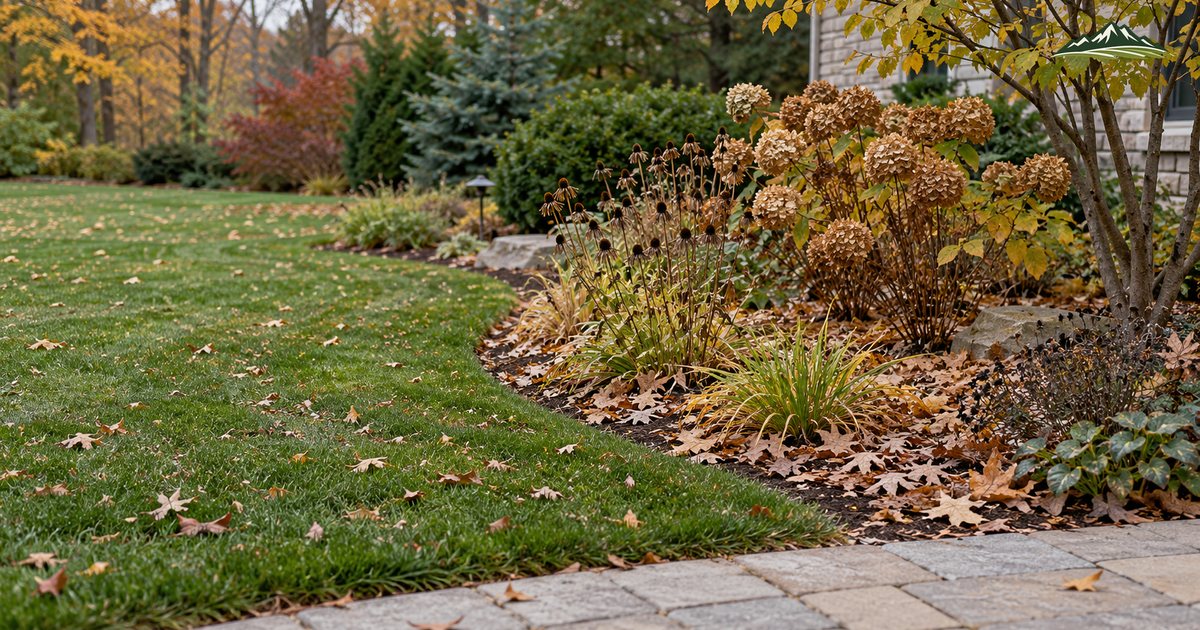
You do not need to make every part of a Cincinnati yard leaf-free. Protect the usable lawn and paths, and identify planted areas where whole leaves can remain. A useful fall cleanup starts with that map, rather than one instruction to clear everything.
The important distinction is between a light layer that can be managed in the lawn and a persistent cover that hides the grass. Illinois Extension explains that a thick accumulation can smother turf. Leaves in a deliberately retained habitat area serve a different purpose.
Lawn: check what remains after mowing
University of Minnesota Extension recommends mulching dry leaves regularly so the pieces break down into the lawn. If leaves remain piled above the grass instead of filtering into it, collect the excess rather than repeatedly trying to force the entire volume through the mower.
Walk back across the area after the work. Can you see the grass, or have intact leaves formed a blanket? That observation is more useful than counting bags or assuming the entire property needs the same treatment. Recheck after another period of leaf fall; one successful pass does not settle the rest of the season.
Beds: decide what you want to preserve
Whole leaves and standing plant material can provide winter habitat. Illinois Extension describes how moths, butterflies and other wildlife use leaf litter and recommends retaining whole leaves for that purpose. Shredding leaves into lawn mulch and preserving intact leaf habitat are different choices.
Select a defined bed or sheltered garden area, and mark it on a photo before cleanup. Do not assume every bed needs to be stripped bare. If you have a known plant-disease issue, get advice specific to that plant before deciding which material to retain.
Make a three-zone cleanup map
| Zone | Decision to record | What to check afterward |
|---|---|---|
| Maintained lawn | Mulch a manageable layer; collect excess | Grass remains visible rather than buried |
| Selected planting bed | Leave agreed whole-leaf habitat undisturbed | The marked boundary is respected |
| Walkway or patio | Clear the surfaces you use | Leaves have not simply been shifted into another work area |
Take one wide photograph and mark these zones. Label a bed “leave whole leaves” only when that is the intended plan. Label steps, gates and paths that need clearing. This prevents a well-meant cleanup from removing material you wanted to keep.
Decide where collected leaves will go
Illinois Extension identifies composting and using leaves in appropriate garden areas as alternatives to disposal. If you want leaves moved elsewhere on your property, agree on the destination before work begins. An unlabeled pile is not a disposal plan.
If collection or hauling is required, confirm it in the scope. Do not assume that your address qualifies for municipal curbside pickup or that a nearby town's dates apply. Check the current rules for the authority serving the actual property.
Coordinate the map with your cleanup visits
The same zones can be used across several visits, but leaf volume and access can change. Review them when leaves continue to fall or when you change how an area will be used. There is no universal Cincinnati date when every tree will be finished.
For service planning, use the leaf-removal visit checklist. Our Cincinnati leaf-removal page explains the agreed areas, hauling and separate work. Fall plan information covers the available visit options; your approved written quote confirms the work for your property.
Common questions
Should every leaf be removed from my lawn?
Not necessarily. Manageable dry leaves can be mulched into the lawn, but collect excess when a persistent layer covers the grass. Check the result and repeat as leaf fall continues.
Can I keep leaves in a bed during professional cleanup?
Tell the team which defined areas you want left untouched and record them in the scope. Whole-leaf habitat and a cleared bed are different outcomes.
Does leaf removal include cutting back every plant?
No. Agree on plant work separately and identify what should remain. A cleanup name alone does not define every task.
Sources & further reading
- University of Minnesota Extension — Fall leaf mulching is good for your lawn
- Illinois Extension — So MANY Leaves!
- Illinois Extension — Pollinator tips for fall clean up time
Guides are general planning information. Site conditions, service availability, and written quotes determine the work for your property. Any illustrative cost ranges are not binding prices. See current fall plan terms.
Plan cleanup around the areas you use
Share your clearing and leave-in-place zones so High Country can review access, leaf volume and hauling in a property-specific quote.
Request a written cleanup quote